

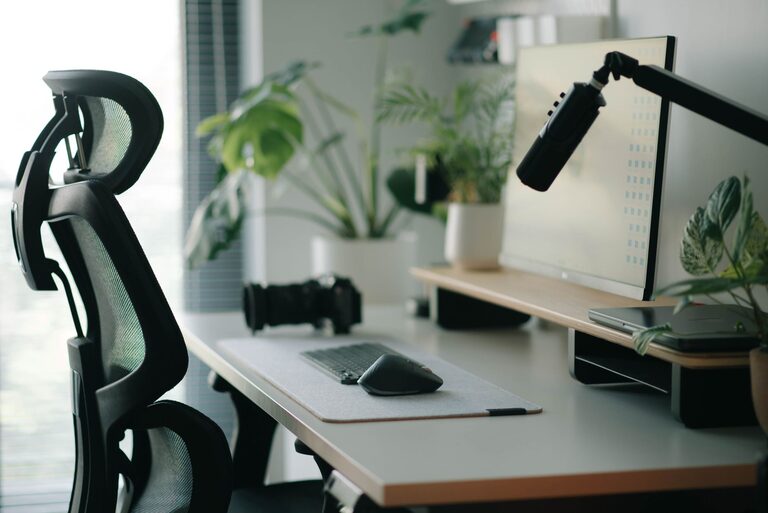
Creating a workspace that supports both focus and comfort is essential for anyone spending significant time at a desk, whether working from home or in an office. A well-thought-out desk setup can reduce discomfort, minimize distractions, and boost your productivity. In this post, we’ll explore practical tips and ideas to help you build an ergonomic and inviting desk environment. Let’s dive in!
Why a Good Desk Setup Matters
Before jumping into the tips, it’s important to understand how your desk setup impacts your workday. A space that aligns with your body’s natural posture can prevent pain and fatigue. Meanwhile, a clutter-free and organized desk minimizes distractions, helping you stay focused on tasks.
Choose the Right Desk and Chair
Desk Height and Size
A desk should be at a height where your elbows rest comfortably at about a 90-degree angle when typing. For most adults, this is roughly 28-30 inches off the ground, but adjustable desks are great for customizing to your needs. Ensure the desk surface is large enough to accommodate your essentials, such as your computer, notebook, and any other tools you regularly use.
Ergonomic Chair
Investing in a good chair is crucial. Look for one with adjustable height, lumbar support, and comfortable cushioning. Your feet should rest flat on the floor or a footrest, and your knees should be at or just below hip level. A supportive chair helps reduce back and neck strain.
Position Your Monitor Correctly
Your monitor’s placement plays a big role in reducing neck and eye strain.
– Eye Level: The top of your screen should be at or slightly below eye level. This lets you look straight ahead without tilting your head.
– Distance: Position the screen about an arm’s length away (roughly 20-30 inches) to avoid leaning forward or squinting.
– Multiple Screens: If using more than one monitor, place them close together and at the same height.
Optimize Lighting
Good lighting prevents eye fatigue and creates a pleasant atmosphere.
– Natural Light: Position your desk near a window if possible to enjoy daylight. Avoid glare on your monitor by using blinds or rearranging your setup.
– Task Lighting: Use an adjustable desk lamp to provide focused light on your work area, especially for reading or writing tasks.
– Avoid Harsh Overhead Lights: Bright, overhead fluorescent lighting can cause headaches and stress. Opt for softer, warm-toned bulbs when possible.
Keep Your Desk Organized
A cluttered desk can lead to a cluttered mind. Here’s how to maintain an orderly workspace:
– Declutter Regularly: Remove items that aren’t needed for your daily tasks.
– Use Storage Solutions: Drawers, shelves, and desk organizers help keep supplies tidy but within reach.
– Cable Management: Use clips or ties to organize cords and keep them out of the way.
– Minimal Decor: Keep personal items minimal to maintain a clean environment while adding a touch of personality.
Incorporate Comfort Accessories
Small additions can greatly improve comfort during long hours at your desk.
– Keyboard and Mouse: Use ergonomic versions to reduce wrist strain. Consider a wrist rest for added support.
– Footrest: If your feet don’t rest comfortably on the floor, a footrest can help improve posture.
– Anti-Fatigue Mat: If you use a standing desk, a cushioned mat can reduce fatigue in your feet and legs.
– Plants: Adding greenery can boost mood and air quality.
Maintain Good Posture
Even the best desk setup requires mindful posture habits.
– Sit Back: Keep your back against the chair’s backrest and avoid slouching.
– Feet Flat: Rest feet flat or on a footrest.
– Take Breaks: Stand up and stretch regularly—about every 30 to 60 minutes.
Personalize for Motivation
Your workspace should inspire you. Add items that motivate and delight you, such as:
– Inspirational quotes
– Family photos
– Art prints
– A small whiteboard or notepad for jotting ideas
Personal touches make your desk a pleasant place to spend time.
Conclusion
A thoughtful desk setup balances functionality, ergonomics, and personal style to support long hours of focused work. By selecting the right furniture, organizing your space, and paying attention to lighting and posture, you can create a comfortable environment that helps you stay productive and healthy. Start implementing these tips today, and watch your workday improve!
Happy organizing!